
Hollow-Core Fiber Testing Explained
Methods, benefits and why advanced testing matters for next-generation optical networks.
Testing the next generation of fiber
Hollow-core fiber (HCF) is moving rapidly from research laboratories into real-world deployments, particularly for data center interconnects (DCI), high-performance computing and latency-sensitive networks.
While its physical structure differs fundamentally from conventional singlemode fiber (SMF), the core objectives of fiber testing remain the same: ensure performance, validate deployment and support long-term reliability.
Field-Proven Characterization
As interest in HCF grows, so do misconceptions around how it should be tested. Field-proven instrumentation and real-world validation help address the unique measurement requirements of hollow-core fiber.
Equipment for Advanced Fiber Applications
Specialty splicing and optical testing equipment plays an important role in laboratory, manufacturing, field and advanced network applications.
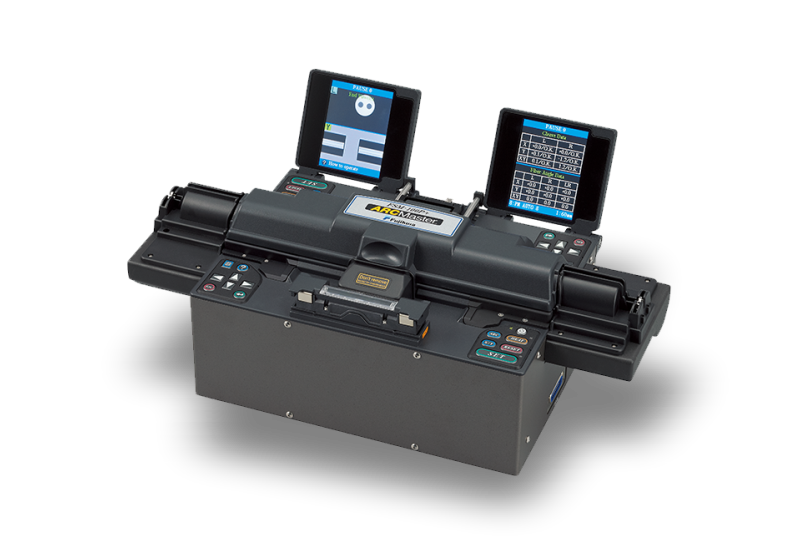
FSM-100P+
Designed with production in mind.
The specialty FSM-100 series offers innovative technologies to address the rapidly expanding splicing needs for factory, manufacturing, laboratory and R&D applications.
The FSM-100P+ is designed for production and is suitable for popular production workstations. The series is engineered for specialty fibres, LDFs, PMFs, heat-sensitive fibres and more.
FSM-100P+ at a Glance
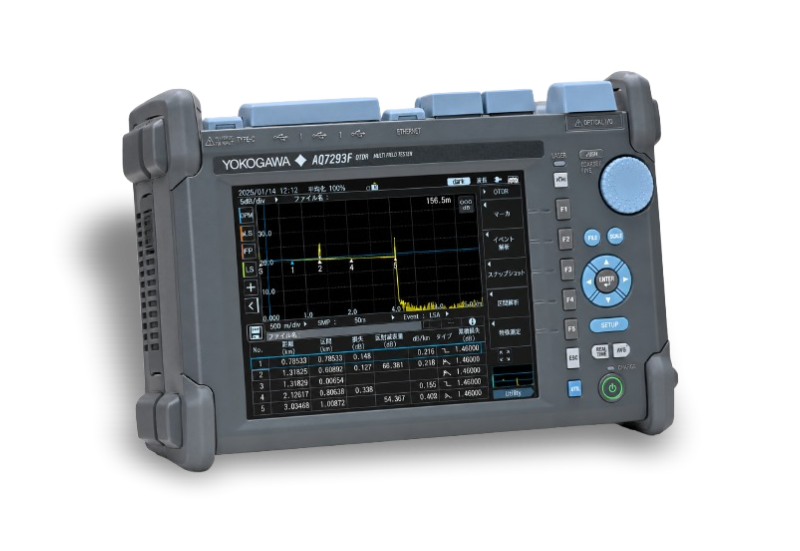
AQ7290
All-in-One OTDR Performance for Every Fiber Challenge
The AQ7290 OTDR satisfies a broad range of test and measurement needs in research, manufacturing and optical network analysis, from access to core.
Comprehensive HCF Testing Methods
HCF requires testing approaches that account for its unique optical characteristics. Four key measurement areas help validate performance and deployment reliability.
High-Performance OTDR Testing
Because HCF exhibits backscattering levels approximately 15 dB lower than standard SMF, conventional OTDRs can struggle.
An HCF-optimized OTDR test kit with high dynamic range enables reliable characterization on links exceeding 100 km. Advanced analysis methods can decouple gas filling events from the fiber trace for precise splice-loss measurement.
Single-Ended Dispersion Analysis
Advanced dispersion analysis can leverage end-of-fiber reflection instead of Rayleigh backscatter, enabling single-ended testing over extended reaches.
This removes the need for a second unit or technician, significantly lowering operational complexity.
High-Speed BER & Latency Verification
High-speed testers and dedicated transport applications enable operators to detect transmission impairments or link degradation.
This includes identifying effects such as gas absorption where low latency and error-free transmission are critical.
Wavelength-Dependent Attenuation Profiles
High-resolution attenuation analysis tools and optical spectrum analyzers make it possible to verify low-loss performance.
These tools can help identify wavelength-dependent features and benchmark performance against vendor specifications.
Preparing Networks For The HCF Era
Hollow-core fiber brings new optical characteristics, but reliable characterization can be achieved by adapting established fiber-testing principles with appropriate instrumentation and analysis.
Explore Advanced Fiber Testing Solutions
Looking for specialty fusion splicing equipment, OTDRs or advanced fiber-testing solutions? Connect with our team to discuss your application.
Talk to Our Team →